My Blog List

SITE DISCLAIMER This page and all others linked to it — All copyrighted sources are quoted and used for comment and education in accord with the nonprofit provisions of: Title 17 U.S.C., Section 107. These sites are in accordance with Title 17 U.S.C., Section 107 and are protected under: The First Amendment Congress shall make no law respecting an establishment of religion, or prohibiting the free exercise thereof; or abridging the freedom of speech, ….
Showing posts with label Roosevelts are crypto-Jews. Show all posts

Tuesday, January 31, 2012

Albert Einstein's Letters to President Franklin Delano Roosevelt

The follower of Ari Luria and his Talmudic Cabalistic interpretation of how to practice magic under the guise of "Science," the Jew Einstein set up the Atomic destruction of Japan under the cover of how to drop the bomb "nicely" and prevent those "terrible German people from winning the war" oh my! lions and tigers and bears!! oh my!

Albert Einstein's Letters to President Franklin Delano Roosevelt

Roosevelt, Einstein's fellow Jew, knew all about this and was working to the same end. Truman just inherited it and went ahead with it.


Albert Einstein's
Letters to President
Franklin Delano Roosevelt

E-World
© 1992-2008 by Glenn Elert
All Rights Reserved -- Fair Use Encouraged

20 February 1997


Table of Contents


Text of the Letters

Einstein's First Letter to Roosevelt

Notes:
The letter that launched the arms race. A warning to President Roosevelt of the possibility of constructing "extremely powerful bombs of a new type" with hints that the German government might be doing just that. Addressed and dated Peconic, Long Island, August 2nd 1939, it was most likely written by Leo Szilard, the scientist who invented the chain reaction. Nevertheless, Einstein took full responsibility for its consequences, calling it "the greatest mistake" of his life. I have tried to reproduce the formatting as it appeared in the original. This is the only letter for which I have done this.
Source:
Public Domain. See the list of mirror sites to view photocopies of the original letter.

                                             Albert Einstein
Old Grove Rd.
Nassau Point
Peconic, Long Island

August 2nd 1939

F.D. Roosevelt
President of the United States
White House
Washington, D.C.


Sir:

Some recent work by E.Fermi and L. Szilard, which has been com-

municated to me in manuscript, leads me to expect that the element uran-

ium may be turned into a new and important source of energy in the im-

mediate future. Certain aspects of the situation which has arisen seem

to call for watchfulness and, if necessary, quick action on the part

of the Administration. I believe therefore that it is my duty to bring

to your attention the following facts and recommendations:

In the course of the last four months it has been made probable -

through the work of Joliot in France as well as Fermi and Szilard in

America - that it may become possible to set up a nuclear chain reaction

in a large mass of uranium,by which vast amounts of power and large quant-

ities of new radium-like elements would be generated. Now it appears

almost certain that this could be achieved in the immediate future.

This new phenomenon would also lead to the construction of bombs,

and it is conceivable - though much less certain - that extremely power-

ful bombs of a new type may thus be constructed. A single bomb of this

type, carried by boat and exploded in a port, might very well destroy

the whole port together with some of the surrounding territory. However,

such bombs might very well prove to be too heavy for transportation by

air.

                                 -2-

The United States has only very poor ores of uranium in moderate

quantities. There is some good ore in Canada and the former Czechoslovakia.

while the most important source of uranium is Belgian Congo.

In view of the situation you may think it desirable to have more

permanent contact maintained between the Administration and the group

of physicists working on chain reactions in America. One possible way

of achieving this might be for you to entrust with this task a person

who has your confidence and who could perhaps serve in an inofficial

capacity. His task might comprise the following:

a) to approach Government Departments, keep them informed of the

further development, and put forward recommendations for Government action,

giving particular attention to the problem of securing a supply of uran-

ium ore for the United States;

b) to speed up the experimental work,which is at present being car-

ried on within the limits of the budgets of University laboratories, by

providing funds, if such funds be required, through his contacts with y

private persons who are willing to make contributions for this cause,

and perhaps also by obtaining the co-operation of industrial laboratories

which have the necessary equipment.

I understand that Germany has actually stopped the sale of uranium

from the Czechoslovakian mines which she has taken over. That she should

have taken such early action might perhaps be understood on the ground

that the son of the German Under-Secretary of State, von Weizsäcker, is

attached to the Kaiser-Wilhelm-Institut in Berlin where some of the

American work on uranium is now being repeated.

Yours very truly,
signature
(Albert Einstein)

Einstein's Second Letter to Roosevelt

Notes:
No comments at this time.
Source:
Ronald W. Clark. Einstein: The Life and Times. New York: Avon Books, 1970: 678-679.

March 7, 1940

I wish to draw your attention to the development which has taken place since the conference that was arranged through your good offices in October last year between scientists engaged in this work and governmental representatives.

Last year, when I realized that results of national importance might arise out of research on uranium, I thought it my duty to inform the administration of this possibility. You will perhaps remember that in the letter which I addressed to the President I also mentioned the fact that C. F. von Weizsäcker, son of the German Undersecretary of State, was collaborating with a group of chemists working upon uranium at one of the Kaiser Wilhelm Institutes - namely, the Institute of Chemistry.

Since the outbreak of the war, interest in uranium has intensified in Germany. I have now learned that research there is carried out in great secrecy and that it has been extended to another of the Kaiser Wilhelm Institutes, the Institute of Physics. The latter has been taken over by the government and a group of physicists, under the leadership of C. F. von Weizsäcker, who is now working there on uranium in collaboration with the Institute of Chemistry. The former director was sent away on leave of absence, apparently for the duration of the war.

Should you think it advisable to relay this information to the President, please consider yourself free to do so. Will you be kind enough to let me know if you are taking action in this direction?

Dr. Szilard has shown me the manuscript which he is sending to the Physics Review in which he describes in detail a method of setting up a chain reaction in uranium. The papers will appear in print unless they are held up, and the question arises whether something ought to be done to withhold publication.

I have discussed with professor Wigner of Princeton University the situation in the light of the information available. Dr. Szilard will let you have a memorandum informing you of the progress made since October last year so that you will be able to take such action as you think in the circumstances advisable. You will see that the line he has pursued is different and apparently more promising than the line pursued by M. Joliot in France, about whose work you may have seen reports in the papers.

Einstein's Third Letter to Roosevelt

Notes:
This is only a fragment of the letter's body.
Source:
Ronald W. Clark. Einstein: The Life and Times. New York: Avon Books, 1970: 681.

April 25, 1940

I am convinced as to the wisdom and the urgency of creating the conditions under which that and related work can be carried out with greater speed and on a larger scale than hitherto. I mwas interested in a suggestion made by Dr. Sachs that the Special Advisory Committee supply names of persons to serve as a board of trustees for a nonprofit organization which, with the approval of the government committee, could secure from governmental or mprivate sources or both, the necessary funds for carrying out the work. Given such a framework and the necessary funds, it (the large-scale experiments and exploration of practical applications) could be carried out much faster than through a loose cooperation of university laboratories and government departments.

Einstein's Fourth Letter to Roosevelt

Notes:
Subject: Fourth Einstein Letter
Date: Mon, 08 Dec 97 16:07:03 EST
From: William Lanouette
To: Glenn Elert

This fourth letter to FDR was [also drafted] by Leo Szilard. In it Einstein proposed that the President hear Szilard's views about setting policies for the A-bomb. Einstein told FDR that it was Szilard who first raised the possibility of nuclear weapons and that this had led Einstein to write the first letter in August 1939. Einstein said that Szilard and other scientists were interested in communicating their views about policy to members of FDR's cabinet and that it was worth the President's time to hear what Szilard had to say. The letter failed to reach President Roosevelt before his death on April 12th 1945.
Source:
William Lanouette with Bela Silard. Genius in the Shadows: A Biography of Leo Szilard, The Man Behind the Bomb. Chicago: University of Chicago Press, 1994: 261-2.

112 Mercer Street
Princeton, New Jersey
March 25, 1945

The Honorable Franklin Delano Roosevelt
President of the United States
The White House
Washington, D.C.

Sir:

I am writing to introduce Dr. L. Szilard who proposes to submit to you certain consideration and recommendation. Unusual circumstances which I shall describe further below introduce me to take this action in spite of the fact that I do not know the substance of the considerations and recommendations which Dr. Szilard proposes to submit to you.

In the summer of 1939 Dr. Szilard put before me his views concerning the potential importance of uranium for national defense. He was greatly disturbed by the potentialities involved and anxious that the United States Government be advised of them as soon as possible. Dr. Szilard, who is one of the discoverers of the neutron emission of uranium on which all present work on uranium is based, described to me a specific system which he devised and which he thought would make it possible to set up a chain reaction in un-separated uranium in the immediate future. Having known him for over twenty years both from his scientific work and personally, I have much confidence in his judgment and it was on the basis of his judgment as well as my own that I took the liberty to approach you in connection with this subject. You responded to my letter dated August 2, 1939 by the appointment of a committee under the chairmanship of Dr. Briggs and thus started the Government's activity in this field.

The terms of secrecy under which Dr. Szilard is working at present do not permit him to give me information about his work; however, I understand that he now is greatly concerned about the lack of adequate contact between scientist who are doing this work and those members of your Cabinet who are responsible for formulating policy. In the circumstances I consider it my duty to give Dr. Szilard this introduction and I wish to express the hope that you will be able to give his presentation of the case your personal attention.

Very truly yours,

(A. Einstein)


Annotated Bibliography

Mirror Sites of the First Letter

Letter from Albert Einstein to President Franklin D. Roosevelt: 08/02/1939. ARC Identifier 593374.
The letter itself is in the Franklin D. Roosevelt Library in Hyde Park, NY. The link above takes you to the National Archives copy of this item in pdf form.
Einstein to Roosevelt, August 2, 1939. Leo Szilard Home Page. Gene Dannen.
An html document that includes an inline image of the letter with some insightful commentary on its origin. Part of the truly excellent Leo Szilard Online. (As noted earlier, Szilard was the primary author of the letter.) This is easily the best site from a content standpoint.
Einstein's Letter to FDR. Frontiers: Research Highlights 1946-1996. Argonne National Laboratory.
An html document with inline images of the letter.
Einstein/Sachs Document Collection. Manhattan Project Heritage Preservation Association.
A series of 20 documents represent the complete written communication that took place between President Roosevelt and the scientific community (represented by Albert Einstein, Leo Szilard, Edward Teller, and Eugene Wigner) in the Fall of 1939.

Related Links

Albert Einstein Online. S. Morgan Friedman.
The source of all things Einstein (formerly located at the University of Pennsylvania).
Albert Einstein's Long Island Summer. Chuck Rothman.
An interesting brush with greatness story from the period in Einstein's life when he was approached to "author" the letter.
Atomkeller-Museum. Stadt Haigerloch, Deutschland.
The site where the last German experiments on nuclear fission were conducted during World War II. Werner Heisenberg, Carl-Friedrich von Weizsäcker, and Karl Wirtz headed the research. Includes audio files of interviews with Heisenberg.
Einstein Archives Online.
Itemized database of several thousand documents written by, written to, or written about Albert Einstein. Many items in his own handwriting. Does not contain any images of his letters to Roosevelt, however.
Leo Szilard Online. Gene Dannen.
The source of all things Szilard; the author of the famous first letter as well as the obscure fourth letter.
The Expanded Quotable Einstein. Alice Calaprice.
A book published by Princeton University Press.

Hiroshima: The Harry Truman Diary and Papers

If anyone ever kowtowed to the Jews absolutely and completely and groveled and gave them everything they ever wanted, being himself a Jew [via Warburg --- and other Jew Families going back to the slave trade in Africans] - it was Roosevelt.

Did you notice in this linked article? "...the poorer Jewish community than had anyone..." Yes, he unlawfully and unconstitutionally took the U.S. off of the gold standard and gave everything to the unlawful and unconstitutional Federal Reserve and the unlawful and unconstitutional Jew income tax usury and thieving system. He Zio-whacked Pearl Harbor and the Japanese cities of Hiroshima and Nagasaki. Yes, the Japanese were going to fight to the death otherwise, it is their home - what did you expect? – just like Iraqis and Afghanis –– they will never defeat the Pashtun.

The New World Order: Political Family of the Zio-iIlluminati

See this, God and His Messiah Jesus Christ our Lord - our right and duty to witness to Him: Albert Einstein's Letters to President Franklin Delano Roosevelt, where Einstein plotted with his fellow Jew, Roosevelt, the Atomic destruction to be poured upon Japan and that was put into force by Roosevelt's vice President become President, Truman.


HIROSHIMA:

HARRY TRUMAN'S DIARY AND PAPERS

The following are excerpts from President Truman's diary and papers that have relevance to the atomic bombing of Japan. Mr. Truman contributed the full versions of these items to the public domain. They can be found in the Harry S. Truman Library in Independence, MO. Except where otherwise noted, the excerpts on this site can also be found in:

Robert Ferrell, ed., Off the Record: The Private Papers of Harry S. Truman

Robert Ferrell, ed., Dear Bess: The Letters from Harry to Bess Truman, 1910-1959


[I have included some explanatory and contextual comments for the excerpts. My writing is in brackets and italics, as I have done with this paragraph.]


- Doug Long


[4/12/45: President Franklin Roosevelt dies. Vice-President Harry Truman becomes President.]


4/12/45 Diary Entry:

"I did not know what effect the situation [the change in Presidents] would have on the war effort, price control, war production and everything that entered into the emergency that then existed. I knew the President had a great many meetings with Churchill and Stalin. I was not familiar with any of these things and it was really something to think about but I decided the best thing to do was to go home and get as much rest as possible and face the music."


[Later, Truman described his lack of preparation for managing the war to his daughter:]

3/3/48 Letter to Margaret Truman:

"If there ever was a top secret this is it. Someday I'll have to tell it. As you know I was Vice-President from Jan. 20 to April 12, 1945. I was at Cabinet meetings and saw Roosevelt once or twice in those months. But he never did talk to me confidentially about the war, or about foreign affairs or what he had in mind for the peace after the war."

[Later in the letter, President Truman lamented about his early days as president:] "Then I had to start in reading memorandums, briefs, and volumes of correspondence on the World situation. Too bad I hadn't been on the Foreign Affairs Committee or that F.D.R. hadn't informed me on the situation." (Margaret Truman, Letters From Father, pg. 103-106).


5/17/45 Truman Appointment Sheet Entry - meeting with Sec. of the Navy James Forrestal:

"Held a session in projection room to outline the proposed campaign in Pacific for the Japanese war. Apparently a very detailed plan worked out with the idea of invasion of Japan."

[The meaning of this passage is unclear. Forrestal had seen many Americans killed at the battle of Iwo Jima during his trip there in February 1945. He was horrified, and upon returning implored, "We cannot go from Iwo to Iwo. We must find a formula to gain peace without this frightful bloodshed." (Ellis Zacharias, "The Forrestal Enigma", United Nations World, March 1949). Yet in the week before the 5/17 meeting with Truman, Forrestal had questioned the wisdom of having Russia participate in an invasion of Japan. The Dept. of War believed that Russian entry would help save American lives. Forrestal, on the other hand, feared control of additional occupied territory by Russia. He also hoped that postwar Japan might become a counterweight to Russia in the Far East. The Navy favored their blockade as the primary means of defeating Japan. A psychological warfare plan, focusing on non-military methods of winning the war, that Forrestal had backed had been largely rejected. (Ellis Zacharias, "How We Bungled the Japanese Surrender", Look, 6/6/50).]


6/17/45 Diary Entry:

"I have to decide Japanese strategy - shall we invade Japan proper or shall we bomb and blockade? That is my hardest decision to date. But I'll make it when I have all the facts."

[The next day Truman met with military representatives to discuss how the war against Japan should proceed. Truman decided at that meeting to have the Joint Chiefs of Staff go ahead with plans to invade Kyushu, the southernmost of Japan's four major islands. The planned invasion date was Nov. 1, 1945].


[7/16/45: The first atomic bomb was successfully tested. That night Truman, who was in Potsdam, Germany at a conference with Churchill and Stalin, received a brief secret notification that the atomic bomb test had "exceeded expectations". It's likely that Truman's diary reference on 7/17/45 to his "dynamite" refers to the a-bomb news, of which he had not told Stalin, from the 16th.]


7/17/45 Diary Entry:

"I told Stalin that I am no diplomat but usually said yes & no to questions after hearing all the argument. It pleased him. I asked him if he had the agenda for the meeting. He said he had and that he had some more questions to present. I told him to fire away. He did and it is dynamite - but I have some dynamite too which I'm not exploding now."

"He'll [Stalin and Russia] be in the Jap War on August 15th. Fini Japs when that comes about."

[Did this mean that Truman thought Russia would be the final element in bringing Japan's defeat? Or Russia plus the atomic bomb? Truman did not receive word of when the first atomic bomb would be ready for use on Japan until July 22nd.]


[7/18/45: Truman received another brief message confirming the success of the a-bomb test. Later that day he wrote his wife a letter.]

7/18/45 Letter to Bess Truman:

"...I've gotten what I came for - Stalin goes to war [against Japan] August 15 with no strings on it. He wanted a Chinese settlement [in return for entering the Pacific war, China would give Russia some land and other concessions] - and it is practically made - in a better form than I expected. [Chinese Foreign Minister] Soong did better than I asked him. I'll say that we'll end the war a year sooner now, and think of the kids who won't be killed! That is the important thing."


7/18/45 Diary Entry:

"P.M. [Prime Minister Winston Churchill] & I ate alone. Discussed Manhattan [atomic bomb] (it is a success). Decided to tell Stalin about it. Stalin had told P.M. of telegram from Jap Emperor asking for peace. Stalin also read his answer to me. It was satisfactory. Believe Japs will fold up before Russia comes in. I am sure they will when Manhattan appears over their homeland. I shall inform Stalin about it at an opportune time." [The closest Truman came to doing that was on 7/24/45 when "I casually mentioned to Stalin that we had a new weapon of unusual destructive force." (Harry Truman, "Memoirs, 1945", pg. 416). No mention was made by Truman that the weapon was an atomic bomb.]

[A positive response or inquiry to Japan regarding their request for peace was avoided on the grounds that the purpose of Japan's request was not "clear", as Stalin put it. For the request, see U.S. Dept. of State, "Foreign Relations of the U.S., The Conference of Berlin (Potsdam) 1945, vol. 1", pg. 875-876 and 879-880. For Stalin's response to Japan, see U.S. Dept. of State, "Foreign Relations of the U.S., The Conference of Berlin (Potsdam) 1945, vol. 2", pg. 1250-1251 and 1587-1588.]


[The following diary entry is not found in "Off the Record". It appears to refer to the meeting between Truman and Stalin on 7/17/45 at the Potsdam Conference. It may have been written by Truman in the Fall of 1951 for his aide Eben Ayers (Gar Alperovitz, "The Decision to Use the Atomic Bomb", pg. 558-559).]

7/19/45 Diary Entry:

"Stalin was a day late in arriving. It was reported that he was not feeling up to par. He called on me as soon as he arrived. It was about 11 A.M. He, Molotov, Vishinski and Pavlov stayed for lunch. We had a most pleasant conference and Stalin assured me that Russia intended to carry out the Yalta agreements and to enter the war against Japan in August." (William Hillman, "Harry S. Truman: In His Own Words", pg. 123).


7/20/45 Letter to Bess Truman:

"I have to make it perfectly plain to them [Russia and Great Britain] at least once a day that so far as this President is concerned Santa Claus is dead and that my first interest is U.S.A., then I want the Jap war won and I want 'em both in it. Then I want peace - world peace and will do what can be done by us to get it."


[7/21/45: This afternoon Truman received his first detailed report of the successful atomic bomb test of 7/16/45.]


[7/22/45: Truman was informed that the first atomic bomb for use on Japan "...will be ready for final operation first good break in August. Complicated preparations for use are proceeding so fast we should know not later than July 25 if any change in plans." (U.S. Dept. of State, "Foreign Relations of the U.S., The Conference of Berlin (Potsdam) 1945, vol. 2", pg. 1372); the date Truman was informed comes from the Henry Lewis Stimson Papers, 7/22/45 Diary entry, Manuscripts and Archives, Yale University Library.]


7/22/45 Letter to Bess Truman:

"He [Stalin] talked to me confidentially at the dinner [on 7/21/45] and I believe things will be all right in most instances. Some things we won't and can't agree on - but I have already what I came for [see the 7/18/45 letter to Bess Truman]. Hope I can break it off in a few days." [i.e., leave the Potsdam Conference].


[7/24/45: Truman was given more specific dates for when an atomic bomb would be ready to drop on Japan: "...some chance August 1 to 3, good chance August 4 to 5 and barring unexpected relapse almost certain before August 10." (U.S. Dept. of State, "Foreign Relations of the U.S., The Conference of Berlin (Potsdam) 1945, vol. 2", pg. 1374); the date Truman was informed comes from the Henry Lewis Stimson Papers, 7/24/45 Diary entry, Manuscripts and Archives, Yale University Library.]

[7/25/45: Sec. of War Henry Stimson and Army Chief of Staff George Marshall approved and sent the order to drop atomic bombs on Japan "after about 3 August 1945" (Leslie Groves, "Now It Can Be Told", pg. 308.]


7/25/45 Diary Entry:

"We met at 11 A.M. today. That is Stalin, Churchill and the U.S. President. But I had a most important session with Lord Mountbattan & General Marshall before than. We have discovered the most terrible bomb in the history of the world. It may be the fire destruction prophesied in the Euphrates Valley Era, after Noah and his fabulous Ark.

"Anyway we 'think' we have found the way to cause a disintegration of the atom. An experiment in the New Mexican desert was startling - to put it mildly. Thirteen pounds of the explosive caused the complete disintegration of a steel tower 60 feet high, created a crater 6 feet deep and 1,200 feet in diameter, knocked over a steel tower 1/2 mile away and knocked men down 10,000 yards away. The explosion was visible for more than 200 miles and audible for 40 miles and more.

"The weapon is to be used against Japan between now and August 10th. I have told the Sec. of War, Mr. Stimson, to use it so that military objectives and soldiers and sailors are the target and not women and children. Even if the Japs are savages, ruthless, merciless and fanatic, we as the leader of the world for the common welfare cannot drop this terrible bomb on the old capital or the new [Kyoto or Tokyo].

"He [Stimson] and I are in accord. The target will be a purely military one and we will issue a warning statement [known as the Potsdam Proclamation] asking the Japs to surrender and save lives. I'm sure they will not do that, but we will have given them the chance. It is certainly a good thing for the world that Hitler's crowd or Stalin's did not discover this atomic bomb. It seems to be the most terrible thing ever discovered, but it can be made the most useful."

[Privately, Truman later expressed misgivings about the mass killing of civilians in Hiroshima; see the "Didn't the Japanese Deserve It?" section in Random Ramblings on Hiroshima.]


[7/26/45: The U.S., Great Britain, and China issued the Potsdam Proclamation, which called for Japan's "unconditional surrender". It made no reference to the future status of the Emperor, Russia's secret agreement to declare war on Japan, or the atomic bomb. It was rejected by Japan's Prime Minister Suzuki.]


7/31/45 Letter to Bess Truman:

"He [Stalin] doesn't know it but I have an ace in the hole and another one showing - so unless he has threes or two pair (and I know he has not) we are sitting all right." [A possible reference to the atomic bomb, possessed at the time by the U.S. but not by Russia.]


[8/6/45: An atomic bomb was dropped on the people of Hiroshima.]


8/6/45: Excerpt from public statement by President Truman. This was the first time he publicly gave a reason for using the atomic bomb on Japan:

"The Japanese began the war from the air at Pearl Harbor. They have been repaid many fold.

"If they do not now accept our terms they may expect a rain of ruin from the air, the like of which has never been seen on this earth." (Public Papers of the Presidents, Harry S. Truman, 1945, pg. 197, 199).


[8/8/45: Russia declared war on Japan, effective 8/9/45.]

[8/9/45: An atomic bomb was dropped on the people of Nagasaki.]

[For a discussion of whether it was necessary to drop atomic bombs on Japan to win WWII, click Hiroshima: Was it Necessary?.]


8/9/45: Excerpt from public statement by President Truman. This was the second time he had publicly given reasons for using the atomic bomb on Japan:

"The world will note that the first atomic bomb was dropped on Hiroshima, a military base. That was because we wished in this first attack to avoid, insofar as possible, the killing of civilians. But that attack is only a warning of things to come. If Japan does not surrender, bombs will have to be dropped on her war industries and, unfortunately, thousands of civilian lives will be lost.

"Having found the bomb we have used it. We have used it against those who attacked us without warning at Pearl Harbor, against those who have starved and beaten and executed American prisoners of war, against those who have abandoned all pretense of obeying international laws of warfare. We have used it in order to shorten the agony of war, in order to save the lives of thousands and thousands of young Americans.

"We shall continue to use it until we completely destroy Japan's power to make war. Only a Japanese surrender will stop us." (Public Papers of the Presidents, Harry S. Truman, 1945, pg. 212).

[Even before Hiroshima was a-bombed, hundreds of thousands of civilians had been killed in the conventional bombings of over 60 of Japan's largest cities (Michael Sherry, "The Rise of American Air Power", pg. 314-315, and pg. 413, note 43). Was President Truman unaware that Hiroshima was primarily a city of civilians and that they would be the a-bomb's main victims? Note his reason (8/10/45 below) for halting the atomic bombings.]


8/9/45 Letter to Senator Richard Russell:

[In response to Sen. Russell's wish that Japan be hit with more atomic and conventional bombing:]

"I know that Japan is a terribly cruel and uncivilized nation in warfare but I can't bring myself to believe that, because they are beasts, we should ourselves act in the same manner.

"For myself, I certainly regret the necessity of wiping out whole populations because of the 'pigheadedness' of the leaders of a nation and, for your information, I am not going to do it until it is absolutely necessary...

"My object is to save as many American lives as possible but I also have a humane feeling for the women and children in Japan." (Barton Bernstein, Understanding the Atomic Bomb and the Japanese Surrender: Missed Opportunities, Little-Known Near Disasters, and Modern Memory, Diplomatic History, Spring 1995, material quoted from pg. 267-268).


[8/10/45: Japan makes surrender offer to Allies.]


[8/10/45: Having received reports and photographs of the effects of the Hiroshima bomb, Truman ordered a halt to further atomic bombings. Sec. of Commerce Henry Wallace recorded in his diary on the 10th, "Truman said he had given orders to stop atomic bombing. He said the thought of wiping out another 100,000 people was too horrible. He didn't like the idea of killing, as he said, 'all those kids'." (John Blum, ed., "The Price of Vision: the Diary of Henry A. Wallace, 1942-1946", pg. 473-474).]


8/10/45 Diary Entry:

"Ate lunch at my desk and discussed the Jap offer to surrender which came in a couple of hours earlier. They wanted to make a condition precedent to the surrender. Our terms are 'unconditional'. They wanted to keep the Emperor. We told 'em we'd tell 'em how to keep him, but we'd make the terms."


8/11/45 Letter to Samuel McCrea Cavert, general secretary of the Federal Council of Churches:

[In response to Cavert's request, "Respectfully urge that ample opportunity to be given Japan to reconsider ultimatum before any further devastation by atomic bomb is visited upon her people.":]

"Nobody is more disturbed over the use of Atomic bombs than I am but I was greatly disturbed over the unwarranted attack by the Japanese on Pearl Harbor and their murder of our prisoners of war. The only language they seem to understand is the one we have been using to bombard them.

"When you have to deal with a beast you have to treat him as a beast. It is most regrettable but nevertheless true." (Gar Alperovitz, The Decision to Use the Atomic Bomb, material quoted from pg. 563).


[8/11/45: U.S. issued counter-surrender offer for Japan to accept.]


8/11/45 Diary Entry:

"We are all on edge waiting for the Japs to answer. Have had a hell of a day."


[8/14/45: Japan accepted the counter-surrender terms.]


1/5/46 Unsent letter to Sec. of State James Byrnes; the excerpt from this letter refers to Truman's feelings at the July 1945 Potsdam Conference about having Russia enter the Pacific war:

"At the time we were anxious for Russian entry into the Japanese War. Of course we found later that we didn't need Russia there and the Russians have been a head ache to us ever since."

Monday, January 30, 2012

The New York Times > New York Region > Roosevelts and the Quirks of Destiny

The New York Times > New York Region > Roosevelts and the Quirks of Destiny

March 16, 2005

Roosevelts and the Quirks of Destiny

By JOSEPH BERGER

The jaw is pure Roosevelt, thrust out with the kind of patrician confidence that shepherded America through the Great Depression and World War II.
But in at least one surprising way Joshua Boettiger, the 31-year-old great-grandson of Franklin and Eleanor, is not a Roosevelt in the classic aristocratic mold. He is studying to be a rabbi, working with a small congregation, Mishkan Ha'am, in southern Westchester County and Riverdale in the Bronx. He credits Franklin and Eleanor's striving for social justice as an inspiration and believes Eleanor would have particularly given him her blessing.

"She was a traitor to her class in the best sense and I hope we're all following in her footsteps," he said.

Indeed, he is not alone among Roosevelt descendants in taking paths that do not seem to rendezvous with their presumed destiny. Nearly 60 years after the president's death, his descendants are spreading in directions that are both wide-ranging and, in some cases, unexpected.

One grandson, James Roosevelt Jr., spent a year as a novice at a California monastery of a Catholic order, the Christian Brothers, though he eventually became a Boston lawyer who made an unsuccessful stab at a Congressional seat against another dynastic heir, Joseph P. Kennedy II. Nina Roosevelt Gibson, a granddaughter, is an Arizona psychologist who has worked with children of drug-addicted and abusive parents. Dr. David Russell Luke, a great-grandson, is a mathematics professor who studies topics like nonsmooth analysis. And Amelia Roosevelt, a great granddaughter, is a concert violinist.

One grandson, Frank Roosevelt, flirted with Marxism in the 1970's and has made it a specialty of his economics teaching at Sarah Lawrence College. But another grandson, Elliott Roosevelt Jr., known as Tony, is a Texas oilman and has supported President Bush's plan to overhaul Social Security, the domestic program for which his grandfather is best known.

These life stories tell volumes about the flexibility of social class and ethnicity in the United States, where even a Roosevelt can become a rabbi, but if anyone is responsible for this potpourri of Roosevelt pursuits, it may be Franklin and Eleanor.

The Roosevelt biographers James MacGregor Burns and Doris Kearns Goodwin say that Franklin and Eleanor's example gave, in Mr. Burns's words, "a kind of permission to descendants to move as widely as they wished." Eleanor's example particularly encouraged many of her five children and 29 grandchildren to find friends in a variety of circles and to do battle with social inequities.To be sure, many descendants of this New York State clan have taken more predictable paths, studying at prep schools like Groton, working for white-shoe law firms, running charities, marrying upper-crust names like Havemeyer and du Pont and taking roles in their Episcopal churches. But others have veered from those paths, sometimes sharply.

Hall Delano Roosevelt, 47, a grandson, remembered three decades ago when his father, James, told him they ought to tour "the campus."

"What campus?" he asked.

"Harvard," the father replied.

But the younger Mr. Roosevelt told his father he did not want to go to Harvard like his older brothers, Michael and James.

"At that point my hair was down to my shoulders and the only thing important in my life was surfing," he said.

He enrolled in Orange Coast College, a junior college in California minutes from the beach. For a time he broiled steaks at a restaurant, but he eventually found his way into jobs in energy conservation and is now an environmental consultant. He even picked up his dynastic calling by running as a city councilman in Long Beach, Calif., serving from 1996 to 2000. "One thing I learned on my father's knee is when you get to a point in life where you've worked hard and gotten yours, we have an absolute obligation to help somebody else get theirs," he said.

Franklin and Eleanor were fifth cousins and the descendants of Claes Martenszen van Rosenvelt, who landed in New Amsterdam during the 1640's. Both Roosevelts grew up with the blueblood trappings of a Henry James and Edith Wharton novel, though Eleanor was orphaned at 10. But Anna Eleanor Roosevelt, who has an uncanny likeness to her grandmother Eleanor and is a board member of the March of Dimes, said that Franklin and Eleanor both spurned lives of genteel ease for public service.

Eleanor took uncommon roles for a woman of her time, serving as a United Nations delegate and newspaper columnist, surrounding herself with labor leaders and officials of black and Jewish groups.

John R. Boettiger, a 65-year-old grandson of the couple, said that the five children of the president struggled under the weight of their parents' achievements. They each married more than once and never quite felt comfortable in the skin of their careers. Three sons struggled with alcohol.

"How do you compete with the commander in chief of the Western world or the first lady of the Western world?" asked Mr. Boettiger, a retired professor of psychology.

But most members of subsequent generations simply gave up on emulation. "There is this legacy to live up to, but I'm never going to win a world war," said Lulie Haddad, the 38-year-old daughter of Kate Roosevelt Whitney, a granddaughter of Franklin and Eleanor, who married a tabloid newspaper reporter.

Files at the Franklin Delano Roosevelt Presidential Library and Museum in Hyde Park, N.Y., suggest that the Roosevelt maverick streak was evident early on. After an expected first marriage to a reputable stockbroker, Anna Roosevelt, the eldest daughter, took a loop out of the film "It Happened One Night" and married Clarence John Boettiger, a working-class reporter for The Chicago Tribune whom she met as he was covering Roosevelt's first presidential campaign.

The second of Franklin D. Roosevelt Jr.'s five wives, Felicia Schiff Warburg Sarnoff, came from the "Our Crowd" German Jewish gentry. And the youngest son, John, seconded the nomination of Dwight Eisenhower at the 1952 Republican convention. One Roosevelt granddaughter, Sara Delano Roosevelt, caused a mild sensation in 1953 when she married a piano prodigy who was the son of an immigrant barber.

But he said that one generation later, he and the other grandchildren were able to take departures in their careers or marriages because his grandmother "had a sense of explicitly recognizing the promise of her grandchildren, whatever their leanings."

Mr. Boettiger married Janet Adler, the daughter of a small-town Jewish family from Indiana. It is their son Joshua who is studying at the Reconstructionist Rabbinical College in Wyncote, Pa.

Among Jews, Mr. Boettiger is usually asked how he can rationalize why Franklin Roosevelt did not rescue more Jews from the Nazis, and did not bomb the railroad tracks leading to Auschwitz.

"On the one hand this was the president most beloved by the Jews ever - who did more for the poorer Jewish community than had anyone - a friend of the Jews," he said. "And people are trying to square that with the fact that he didn't do as much as could have saving Jews from the Nazi machine. Somehow we have to hold both thoughts."

Whatever their doubts, the descendants seem unanimous in their pride in Franklin and Eleanor. Frank Roosevelt, the professor of Marxism, led the effort to build a monument to his grandmother in Riverside Park. But they are also proud that the way Franklin and Eleanor lived their lives made it easier to shape their own.

When he attends the next family reunion, perhaps as an ordained rabbi, Mr. Boettiger said, "I'll take my place among the other funky Roosevelts who have taken alternate paths."

The secret mission of Joseph P. Kennedy, Jr. - Part 1 - and Part 2

What isn't told here is that a much earlier report than what is currently readily available on line was that Elliot Roosevelt "accidentally" released a bomb from one of the Mosquito bombers that dropped right on Joe Kennedy's plane and blew him to smithereens. It makes little difference whether it was close formation bomb release from an overhead mosquito Bomber observer or a radio signal as the article below mentions, either would destroy the plane that Kennedy was in and kill the future Kennedy candidate for President. All "accidentally" of course - not, no accident at all. Roosevelts are crypto-Jews.

Elliott Roosevelt - Wikipedia, the free encyclopedia


Military service

Roosevelt enlisted in the United States Army Air Corps in 1940. He served as a pilot and unit commander in the United States Army Air Forces (USAAF) during World War II.

In January 1943, Roosevelt accompanied FDR as a military attaché to the Casablanca meeting and the subsequent Cairo and Tehran Conferences. At the Tehran Conference, Elliott Roosevelt, apparently under the influence of alcohol, sided with his father in approving of large-scale executions of German POWs by the Soviets.[3]

Roosevelt commanded the following units:
3d Reconnaissance Group, 11 July–13 August 1942 at the rank of major;[4] 30 September 1942–1 March 1943 ending at the rank of colonel[4]

Assigned to Twelfth Air Force and flew P-38 Lightning (F-5) photographic reconnaissance missions during the North Africa campaign in Algeria and Tunisia
90th Reconnaissance Wing, 22 November 1943–25 January 1944 at the rank of colonel[5]

Assigned to Twelfth Air Force, command and control organization that provided photographic reconnaissance to both Twelfth and Fifteenth Air Forces. Operationally controlled both 3d and 5th Reconnaissance Groups in Tunisia. The 90th's subordinate units reconnoitered airdromes, roads, marshaling yards, and harbors in Italy after the Allied landings at Salerno.

325th Reconnaissance Wing, 9 August 1944–17 January 1945 at the rank of colonel;[6] 22 January–13 April 1945 ending at the rank of brigadier general[6]
Assigned to Eighth Air Force, command and control organization that through subordinate units, flew reconnaissance over the waters adjacent to the British Isles and the European continent to obtain meteorological data. Wing aircraft collected weather information needed in planning operations; flew night photographic missions to detect enemy activity; and provided daylight photographic and mapping missions. The wing also flew photographic missions over the Netherlands in support of Operation Market Garden in September 1944 and operated closely with tactical units in the Battle of the Bulge (December 1944–February 1945).

Roosevelt flew 300 combat missions. His decorations included the Distinguished Flying Cross.[7] As a chase pilot for the Operation Aphrodite flights in 1944, he witnessed the death of Joseph P. Kennedy, Jr. over Blythburgh, England.[8]

Original "smart bomb:"

Operation Aphrodite


One of the first military robot planes there ever was is the one in 1944 used to murder future would be presidential candidate Joe Kennedy Jr. by setting him up in it to be a target for, in view of his future planned Presidential run, political assassination by the Roosevelts.

Joseph P. Kennedy, Jr. - elder brother to John F. Kennedy and son of Joseph P. Kennedy Sr.


Joseph Patrick Kennedy, Sr.:

"Roosevelt is run by the Jews and all the anti-fascist sentiment in the United States is largely created by the Jews who run the press." -- quoted in the Foreign Observer, June 1, 1939

______________________________

Do the elite play murderous games? Oh yes.

The first Kennedy murdered by the Zionist Mafia (known as the Kahal in Russia and as the New Deal Roosevelt Bankster Gangster Crooks in America) was Joe Jr., JFK's elder brother and the one that elder Joe Kennedy Sr. had originally intended for the Presidency.
God and His Messiah Jesus Christ our Lord - our right and duty to witness to Him: Opium Lords Israel, the Golden Triangle and the Kennedy Assassination by Salvador Astucia (Dec. 2003, 2nd edition): "None of these five points could be achieved with a Kennedy in the White House. The Israelis distrusted President Kennedy because of his father. It is widely known that Joseph Kennedy Sr developed a strong loathing of Jews from his business dealings with them in finance, Hollywood, and politics. And the elder Kennedy had groomed four sons for the White House, but his oldest—Joe, Jr—had been killed in World War II. President Kennedy’s inauguration in January 1961 marked the beginning of a dynasty that would likely continue until 1985 (after the three surviving sons had each completed two terms)."

Note in the below the original V-3 Supergun, long before Gerald Bull, Pentagon Scientist and Saddam Hussein employee.


The secret mission of Joseph P. Kennedy, Jr. - Part 1

THE SECRET MISSION OF JOSEPH P. KENNEDY, JR.

THE STORY

From 1939 thru 1945 there were many secret missions by the allies to destroy the Nazi war machine. On Aug. 12, 1944, one of our most tragic secret missions occurred. A PB4Y-1, the Navy version of the B-24, loaded with 374

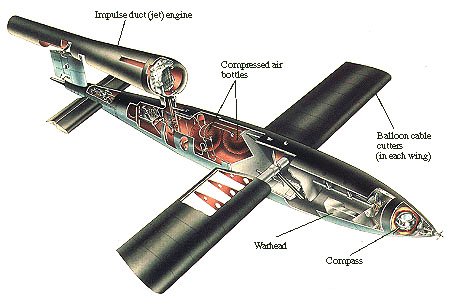
[pictured above] German V-1 "Buzz Bomb"


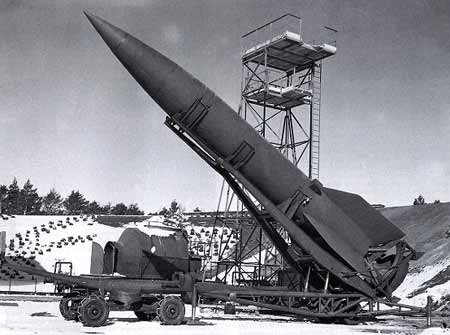
[pictured above] German V-2 Ballistic Missile
boxes of high explosives weighing over 20,000 pounds, took off from England. This flying bomb was piloted by Joseph P. Kennedy, Jr., and accompanied by an armada of various types of aircraft. Flying V-Bombs launched by the Germans were creating havoc inEngland, and it was imperative they be destroyed. Besides the V-1 Buzz Bomb and the deadly V-2 Rocket, the Germans had developed a huge V-3 Supergun. Most of the launch sites were situated in heavily fortified underground bunkers that were difficult to destroy by conventional bombing. Kennedy was on his way to eliminate one of these sites when at 6:20 PM his flying bomb exploded in mid air. The U.S. Government ordered an immediate coverup. For almost 60 years the incident was shrouded in secrecy. Kennedy's younger brother became President. Why did the U.S. want this hushed up? What actually happened on that fateful flight? How was this flying bomb going to be guided to the target? What was Joe Kennedy's background, and how was he selected to carry out this dangerous mission?
FAMILY BACKGROUND
Joseph Kennedy Sr. was one of the wealthiest men in the United States. In the 1920' he reportedly made a fortune bootlegging liquor. He made five million producing low budget movies. In 1938 he was appointed U.S. Ambassador to Britain. He was involved in high society, associating with the Royal Family. But Joe Kennedy Sr. had other problems. He had an admiration for Nazi Germany, and advised the U.S. to remain neutral in the growing conflict. He made no secret about his admiration of Germany. As Hitler became more powerful, he announced that he could conquer all of Europe. Britain was feeling the pressure as Dunkirk was evacuated, and London was viciously bombarded. Hitler planned on Britain being the next to fall. Joe Sr. in his opposition to America joining the war had angered Churchill and Roosevelt. Even his two sons opposed their father. In Dec. 1940, he was removed from office and recalled to the U.S. Politically damaged, his admiration for Germany had been his downfall. On Dec. 7, Japan attacked the U.S. and America declared war. Three days later Hitler declared war on the U.S. Joe Jr. immediately enlisted, entering training as a naval aviator. He started flight training in PT-17s, and after graduation was upgraded to the multi-engine B-24 [PB4Y-1] flying maritime anti-sub patrol. In Aug. of 1943 his younger brother John was involved in a mishap when a Japanese destroyer sliced through his PT-109. The crew made it to nearby islands and all were rescued. John was recognized as a hero. In the meantime ships carrying critical supplies to Britain were being increasingly sunk by German subs. Churchill called for a stepped up effort to destroy the subs. Joe Jr. flew 35 missions in six months destroying many of the U-boats. Joe reportedly fell in love with a married English woman while on leave. It was a top secret affair, with his entire life now veiled in secrecy. On June 5, 1944, an armada set sail across the English Channel, the invasion of Europe had begun. German V bombs were now killing thousands of innocent civilians. This presented a great opportunity for Joe Jr. to see some real action. Hitler continued to introduce his wonder weapons, with Buzz Bombs carrying 2000 pounds of explosives. Over 2000 were launched killing over 5000, it was total devastation. Meteor jets and anti-aircraft guns were able to destroy many of the V-1s, but England had no defense against the V-2. It was 46 feet long with a one ton warhead and was difficult to locate when launched from a mobile site. The V-2 was propelled by liquid alcohol and liquid oxygen, taking it to 315,000 feet, then plunging back to earth at 1800 MPH. Over 1000 were fired at London. The new bunker type underground launch sites were not being destroyed by conventional bombing. The new V-3 Supergun could fire a projectile 95 miles, two every minute, striking London. It was obvious the V-1,V-2, and V-3 had to be stopped.
THE PLAN

England formed an elite group to destroy the launch sites, and asked for volunteers. Joseph Kennedy's squadron, flying in bitter winter weather over the Bay of Biscay, had suffered heavy casualties, with Joe losing his former co-pilot and a number of close friends. He was due for a leave but persuaded his crew to stay on until D-Day. Flying frequently in June and July they were given another opportunity to go home. Joe felt it would be unfair to ask his crew to remain any longer, so they returned to the U.S. Joe remained to volunteer for the very dangerous assignment which would require another month. Joe had completed probably more combat missions in B-24s than any other pilot and was well qualified. He considered his chances at fifty-fifty. Joe was an expert in Radio Control projects and was considered a natural to fly the "drone" in the highly secret mission. To destroy the V-2 menace it was decided to use radio controlled drones carrying massive bomb loads. The U.S. had been experimenting with R.C. drones, as had Germany, who was developing R.C. glider bombs. The X-1 rocket boostered bomb released from a German bomber could glide for six miles when released from 26,000 feet.
The X-1 demonstrated devastating results by sinking many Allied ships, showing the promising use and accuracy of the R.C. guided missile.The U.S. guided their missiles in test using operator-television, however the pay load was too small. They then advanced to full size Radio Controlled aircraft that after establishing control the pilot bailed out. The aircraft would fly to the target by remote control. The Army experimented with B-17s while the Navy made test using the B-24. Early U.S. test failed. Pilots were killed, and the drones missed their target. Despite the numerous failures the U.S. proceeded with their testing of full size aircraft.


The secret mission of Joseph P. Kennedy, Jr. - Part 2

THE ACTUAL TRAGIC MISSION

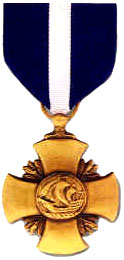
NAVY CROSS
Joe Kennedy saw his chance to become a hero. He was eager to go, and was a very experienced pilot. The system to be used was to load a B-24 with explosives, using two pilots, and the installation of an arming pin to prevent accidental ignition of the explosives. The target was Mimoyecques, France. A P-38 weather plane reported acceptable conditions, it was a go. Kennedy and his co-pilot Bud Willy took off at 5:55PM. The safety pin had been properly installed in the arming unit. Fourteen other aircraft gathered in formation with the "flying bomb". The lead plane was a B-17. There were two P-38s to accomplish aerial photography over the target. Also included were two Mosquito bombers, one to monitor weather, the other flown by Elliot Roosevelt, the son of the President of the United States. Another B-17 acted as a signal relay over the channel, with six P-51s as escort. The flying bomb was followed by two Lockheed Venturas which are believed to have been the "mother" guidance planes. This armada after hooking up in formation flew from Fersfield to Framingham, England, then to Beccles testing their RC equipment. Final test would be made with the B-24 flying alone on Radio Control. They flew from Beccles to Clacton, then took the final turn to head for the target. Both pilots were scheduled to bail out near Dover after preparing the plane to continue to the launch target guided by the mother plane. The actual flight plan called for a flyover Beccles but went further east than intended and flew over Blytheburgh. Kennedy made final preparations to set the plane on remote control. He removed the safety pin, and signaled O.K. with the code phrase "Stay Flush". These would be his last words as the plane exploded at 6:20PM over Blytheburgh.
AFTERMATH AND COVERUP
Joseph Kennedy Jr. was to be the first tragedy to strike the Kennedy Family. Very few parts of the B-24 were found, no bodies.The official crash report indicated the cause of the accident was unknown. Once the safety pin was removed ignition could have been triggered by any aircraft making radio contact with the aircraft. Joe was awarded the Navy Cross posthumously. The Navy Cross was also awarded to his brother in the PT-109 incident. After the accident there was an immediate coverup of the entire accident which was already clouded in secrecy. No information was released for almost 60 years, even now no real disclosure. One point that is pretty hard to swallow, the whole truth is that the mission was pointless. Through a huge intelligence failure it was later disclosed that the target launch site had been severely damaged by RAF raids a week before. They had dropped massive "Tall Boy" bombs on it. So- the disaster was probably unnecessary. It is largely believed this is the reason behind the coverup. 20 years after the war ended the case was opened up, which only raised more questions. Claims bordered on the ridiculous. The Germans claimed they shot the plane down, Joe was captured and later killed in an escape attempt. Other claims were that Joe parachuted and was captured by a Panzer division, and later Kennedy and Willy were both shot. Many articles were published which claimed mostly erroneous information. Finally Elliot Roosevelt, son of FDR, called all of the reports ridiculous and complete nonsense. He was there and saw first hand what happened. He witnessed the useless death of a potentially great American. After all, the U.S. had tried 19 RC bomb test and none of them were successful. Was this mission hushed up and so secret because it was not necessary?
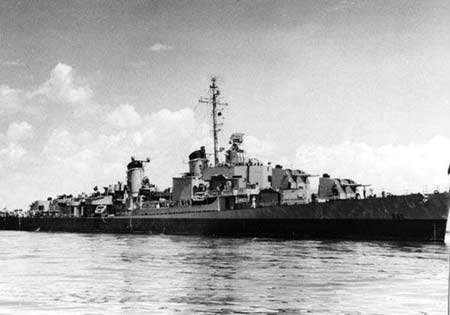
In 1946 a destroyer, the USS Joseph P. Kennedy, JR. was launched. Destroyer number 850, it was the final tribute by the Navy to a gallant officer and his heroic devotion to duty. This ship is now a museum, permanently docked at Battleship Cove, Fall River, Massachusetts. It is a National Historic Landmark and member of the Historic Naval Ships Assoc, a tribute to an American Hero and to those who sailed on Destroyers.

UNITED STATES ATLANTIC FLEET
AIR FORCE
Mr. and Mrs. Joseph P. Kennedy
Hyannisport, Cape Cod
Massachusetts

Dear Mr. and Mrs. Kennedy:

This is as difficult a letter as I will ever have to write, and as you know, it is not the first of it's kind. By now you will have been notified by the Navy Department that your son, Joe, has been killed in an aircraft accident while on an operational mission. The delay incident to your receipt of this letter is regrettable but it is necessary due to carrying out proper security restrictions. Joe's effects have been packed and inventoried and will be shipped to the Personal Effects Distribution Center, Naval Supply Depot for further shipment to New York in accordance with the instructions received from his sister, Lady Hartington.

I am not at liberty to disclose the nature of Joe's mission but I can assure you that he gave his life while on a mission vital to the cause for which we are all fighting. As you must know, he volunteered for a special detail which was exceedingly dangerous. By thus volunteering Joe exhibited courage above and beyond the call of duty and contributed his fullest share toward the destruction of our enemy.

Joe was highly regarded by all of us over here and was considered outstanding as an officer and man in every way, in his personal conduct and his devotion to duty. His clean cut, and intelligent way of life was an example to all of us which makes me confident that a nation composed of men like Joe will triumph over any obstacle. He will be missed by his shipmates and his loss will be felt by the Navy and his Country. Mass was said by Chaplain Callery after which we all rededicated our lives to carry on the fight relentlessly until we have won the struggle.

Comment: This letter , endorsed by the United States Navy was notification of the death of Joseph P. Kennedy Jr., received by his parents.

BIOGRAPHY

JOSEPH P. KENNEDY, JR.

Joseph P. Kennedey, Jr., the oldest child of Joseph P. and Rose Kennedy, was born in Massachusetts on July 28, 1915. He was graduated from Choate School in Connecticut and attended the London School of Economics for one year before entering Harvard in 1934. At Harvard he played football and rugby, served on the Student Council and was graduated in 1938, cum laude. He attended Harvard Law School, but left before his final year to volunteer as a Navy Flier. Awarded his wings in May 1942, he flew B-24s with the British Naval Command. His military service, which ended with his death on August 12, 1944, was described as follows by his brother, John F. Kennedy:


His squadron, flying in the bitter winter over the Bay of Biscay,
suffered heavy casualties, and by the time Joe had completed his
designated number of missions in May, he had lost his former co-
pilot and a number of close friends.

Joe refused his proffered leave and persuaded his crew to remain on
for D-day. They flew frequently during June and July, and at the end
of July they were given another opportunity to go home. He felt it
unfair to ask his crew to stay longer, and they returned to the United
States. He remained, for he had heard of a new and special
Assignment for which volunteers had been requested which would
Require another month of the most dangerous type of flying.

…It may be felt, perhaps, that Joe should not have pushed his luck
so far and should have accepted his leave and come home. But two
facts must be borne in mind. First, at the time of his death, he had
completed probably more combat missions in heavy bombers than
any other pilot of his rank in the Navy and therefore was
preeminently qualified, and secondly, as he told a friend early in
August, he considered the odds at least fifty-fifty, and Joe never
asked for any better odds than that.

The Secret mission on which he lost his life was described by a fellow
officer after it was declassified:

Joe, regarded as an experienced Patrol Plane Commander, and a
fellow-officer, an expert in radio control projects, was to take a
"drone" Liberator bomber loaded with 21,170 pounds of high
explosives into the air and to stay with it until two "mother"planes
had achieved complete radio control over the "drone". They were
to bail out over England; the "drone', under the control of the
"mother" planes, was to proceed on the mission which was to
culminate in a crash-dive on the target, a V-2 rocket launching
site in Normandy. The airplane…. was in flight with routine
checking of the radio controls proceeding satisfactorily, when at
6:20 p.m. on August 12, 1944, two explosions blasted the "drone"
resulting in the death of its two pilots. No final conclusions as to
the cause of the explosions has ever been reached.

Joe was posthumously awarded the Navy Cross… and also the Air
Medal… In 1946 a destroyer, the USS Joseph P. Kennedy, Jr.
destroyer No. 850 was launched at the Fore River shipyards as the
Navy's final tribute to a gallant officer and his heroic devotion to
Duty.


U.S.S JOSEPH P. KENNEDY, JR. DD - 850

Comment: This Biography was published by "The Joseph P.
Kennedy, Jr. Foundation.


Story written by website manager Wayland Mayo.

Home Page

Search This Blog

Popular Posts

Blog Archive

Other Blogs of Special Interest

Multi Blog Label Aggregator

Labels

The Antichrist

St. John

The Catholic Creed

Justice of God

          Traditional Catholic Prayers

              Look up, your redemption is at hand

              Palestine Cry

                    Palestine Cry

                      Communist World Government

                          God and His Messiah Jesus Christ our Lord - our right and duty to witness to Him

                          Miko's Blog

                          Iraq Cry

                            Tech_Journal

                                Communist Internationale Sixth

                                The Mark, the Name, the Number of the Beast and the Tower of Babel = EcumenismThe Truth

                                  Apostasy

                                  Good versus evil

                                  Pashtun Resist

                                    Jews called in Christ

                                    Culture

                                    God and His Messiah Jesus Christ our Lord - our right and duty to witness to Him - labels